Industry at a Structural Crossroads
The global nonwovens materials industry is undergoing a structural transformation, driven simultaneously by dual-carbon goals, manufacturing upgrades, and emerging application markets. From material innovation and intelligent manufacturing to high-end applications and circular economy systems, the sector is shifting from scale expansion toward quality improvement, from traditional manufacturing toward green smart production, and from product output toward value output.
Summit Highlights Path Forward
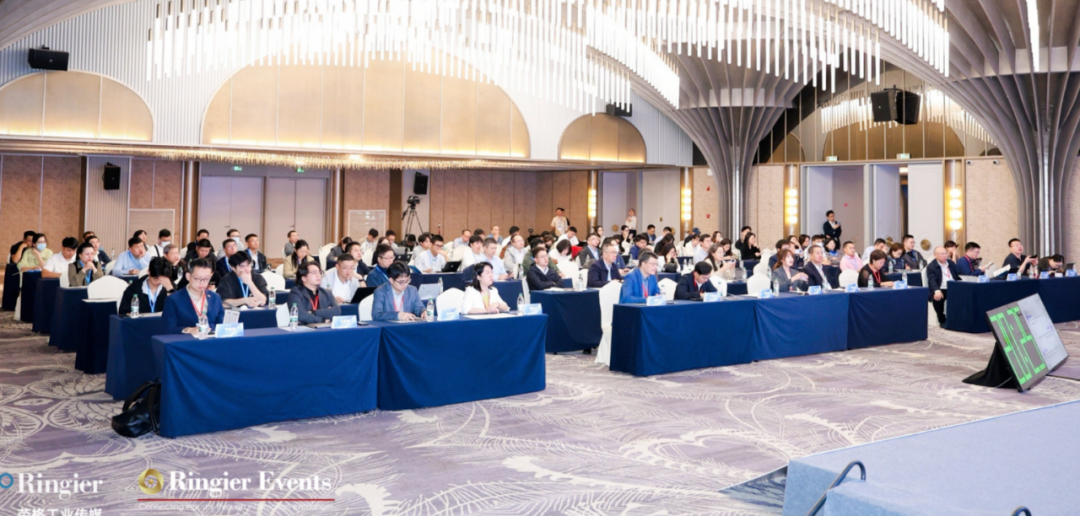
Against this backdrop, the 2026 Nonwovens Innovation Technology Summit, hosted by Ringier Industrial Media, was successfully held in Hangzhou on October 29. Focusing on frontier trends, innovative technologies, regulations, market insights, and practical case studies, the event aimed to help upstream and downstream enterprises seize opportunities in the new round of industrial upgrading.
China Leads Global Production and Trade
In her opening remarks, Liu Yiling, President of Ringier Industrial Media, noted that the global nonwovens industry is steadily returning to a rational and diversified development track after market corrections. As the world’s largest producer and exporter of nonwovens, China stands out with particularly strong performance. According to statistics from the China Nonwovens and Industrial Textiles Association, China’s nonwovens output reached 9.207 million tonnes in 2025, up 7.5% year-on-year and setting a historic high.
Investment Shifts Toward Quality and Sustainability
Investment is accelerating the industry’s transformation. Preliminary figures show that in 2025, China added approximately 70 spunbond and meltblown lines, 15 spunlace lines, 140 needle-punched lines, and 25 thermal-bonded lines, with combined new capacity exceeding 700,000 tonnes. Crucially, this capacity is not merely scale expansion but is increasingly directed toward product quality enhancement, capacity structure optimization, and sustainable development capability building.
Green Transition as the Core Agenda
Green transformation and sustainable development have become the most central issues across the industry, supported by an improving policy and standards framework. The rollout of relevant standards signals that the nonwovens sector is moving from passively responding to environmental requirements toward proactively building a green development framework. As 2026 marks the opening year of the 15th Five-Year Plan, the industry must confront technical and cost bottlenecks in high-end applications, as well as increasingly stringent international trade barriers. Diversified downstream demand—spanning medical and health, personal care, environmental filtration, new energy vehicles, and infrastructure—will continue to provide growth momentum.
Outlook
With innovation and sustainability as twin engines, China’s nonwovens value chain is well positioned to capture new opportunities in the global market while advancing toward higher quality and greener development.
Post time: Oct-30-2026